Dilli, You Know or You Don’t
There are cities that introduce themselves.
Then there’s Dilli.
You see... most cities are desperate to be understood. They preen. They put on their finest neon and glass, shaking your hand like a salesman in a mid-range hotel. Paris, London, Tokyo; they practically beg for your affection.
Then... there’s Dilli.
Dilli doesn't care if you like her. She isn't interested in your approval or your itinerary. She’s an old soul with blood under her fingernails and poetry in her lungs. She’s the smell of paranthas frying in oil that’s seen three generations of the same family, mixed with the scent of ancient stone cooling after a brutal June sun.
I once knew a man in Nizamuddin, a locksmith by trade, but a philosopher by temperament. He told me that Dilli isn’t a place you visit; it’s a fever you succumb to. You can walk through the wide, sterile avenues of the Lutyens’ power corridors, or you can lose yourself in the suffocating, beautiful chaos of the walled city where the shadows are thick enough to swallow a secret or a man.
It’s a city of ghosts. Thousands of them, whispering under the roar of the metro.
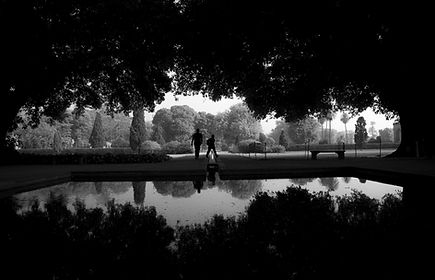
Most people? They see the dust. They see the crowds. They see the noise. They think they’ve seen Dilli. They’re wrong. To truly see her, you have to be willing to look at the cracks in the pavement, the way the light hits a crumbling tomb at four in the afternoon, the silence in the middle of a riot of colour.
It’s quite simple, really.
Dilli... you either know her, or you don’t. And if you don't? Well... perhaps you’re just not looking hard enough.
Look closely, because once the light shifts, the truth disappears back into the shadows.




%20(1).jpg)